Firm OS & Practice Operations
Firm Document Governance, Ethical Walls & Access Control
Institutional data compliance, cryptographic access isolation, 3 governance views (Ethical Chinese Walls, 8-Year Statutory Archival Schedules, Dynamic Client Watermarking & PII Redaction), and audit logging.
10 min read•Firm OS Enterprise•Updated October 2026
1.Master Document Governance & Security Hierarchy Overview
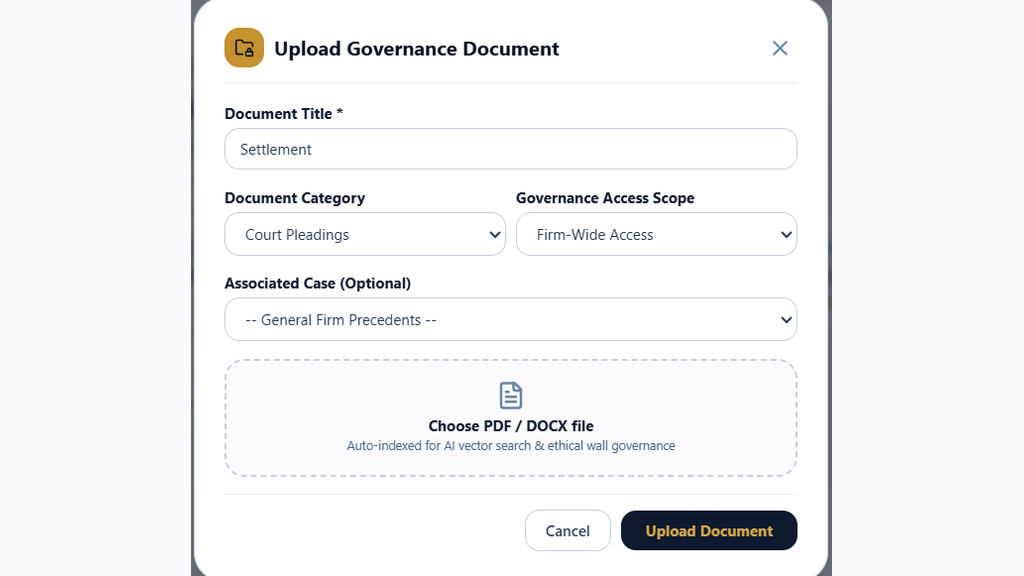
Open 'Document Governance' from the WORK sidebar section to manage firm-wide file security, confidentiality, and data retention.
Controls:Governance Tab Switcher(Chinese Walls / Retention / Watermarks)+ New Ethical Wall Rule(Establish confidential brief isolation)Security Audit Log(View immutable file access records)
- Why it is there: To enforce strict client confidentiality under Bar Council Rule 36, ISO 27001, and Indian Digital Personal Data Protection (DPDP) Act standards.
- How it helps: Prevents unauthorized internal file access, isolates conflicting transactions, and audits every file interaction.
- Governance Sub-Sections: 1. Ethical Chinese Walls & Quarantine, 2. Statutory Retention & Archival Schedules, 3. Dynamic Watermarking & PII Redaction.
Chamber Authentication Required
Step 1 is shown above as a preview. All remaining procedural steps, litigation blueprints, and interactive controls require an active chamber or firm login.
Frequently Asked Questions
- Can an Ethical Chinese Wall be bypassed by a Firm Admin?
- No. Ethical Chinese Walls enforce cryptographic hardware-level access restrictions. Any access override by an administrator generates a high-severity immutable entry in the SOC-2 audit ledger.
Was this guide helpful?
Your feedback directly shapes our support documentation.